
Doctors commonly recommend X-rays when they need a quick view of bones, joints, or the chest. The exam is fast and usually completed within minutes. Here is when an X-ray is the right test, when it is not enough, and what to expect.
Bone and joint injuries
X-rays are frequently used to check for fractures, dislocations, and changes related to injury or pain in the arms, legs, hands, feet, and spine. If you have had a fall or an accident in Gujranwala, an X-ray at Al-Amin Diagnostic Center — Munir Chowk, DHQ Hospital Civil Lines — takes only a few minutes, and you can usually walk in without an appointment.
Chest imaging
Chest X-rays may be recommended for cough, breathing concerns, chest pain, infection screening, or other physician-directed assessments. A chest X-ray is also the standard test for job medicals and visa medicals.
Why referrals matter
A referral helps ensure the correct body part and view are requested so the exam supports the doctor's diagnostic decision effectively.
X-ray vs CT vs MRI: a quick comparison
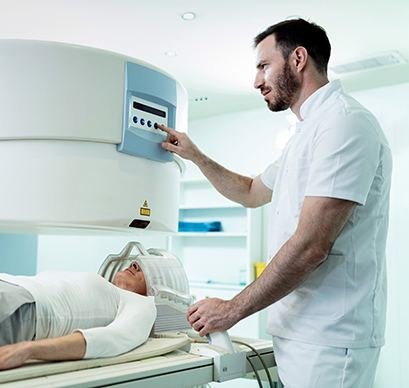
Think of it this way. An X-ray is a quick photograph — best for bones and the chest, done in minutes. A CT scan is a detailed 3D picture — best when the doctor needs to see inside the chest, belly, or head in detail, and fast. An MRI is the closest look at soft tissue — brain, spine, joints — but it takes longer and costs more. Your doctor picks the simplest test that can answer the question. That is why an X-ray usually comes first.
Is an X-ray safe? Radiation in plain words
An X-ray uses a small amount of radiation, and it is natural to ask about it. A single chest X-ray gives you about the same radiation as a few days of natural background radiation from the world around you. The dose is kept as low as possible, only the area asked for is X-rayed, and a lead apron is used when needed. Pregnant women should always tell us before the test — we will discuss it with you and your doctor first.
What happens if the X-ray shows something?
If the X-ray shows a fracture, an infection, or anything unusual, the report goes to your doctor, who decides the next step — a plaster, medicine, or a more detailed scan like a CT or MRI. Sometimes the X-ray is normal and that itself is the answer: it rules out a fracture and your doctor looks elsewhere. Either way, do not try to read the report alone. Take it to your doctor and let them explain what it means for you.
Our team can guide you on the appropriate service, preparation steps, and scheduling.
Book an Appointment